AI in ecommerce is transforming how online stores operate in 2026. The digital marketplace is moving faster than ever before, and ecommerce businesses now rely on artificial intelligence to manage inventory, respond to customers, and deliver personalized shopping experiences at scale.
We know how frustrating it is to see competitors launch smarter campaigns while you are stuck updating spreadsheets. This guide is designed to show you how modern technology can handle the heavy lifting. By leveraging AI in ecommerce, we can create a shopping experience that feels personal to every visitor while keeping your operations lean and efficient.
Transformative Applications of AI in Ecommerce
The integration of artificial intelligence into the retail sector has moved past the experimental phase. Today, it is a fundamental requirement for anyone looking to scale their operations in 2026. These tools allow us to process vast amounts of data in seconds, something that would take a human team weeks to accomplish.Recent industry data suggests that nearly 90% of retailers now use some form of machine learning daily. This shift is not just about technology but about meeting rising customer expectations. We can now provide a tailored experience for every visitor who lands on a site by using AI tools for online stores.
Personalized product recommendations
One of the most effective ways to increase average order value is through smart suggestions. Modern algorithms track user behavior such as previous purchases, clicked items and time spent on specific pages to recommend products that truly resonate. This level of personalization ensures that shoppers find what they need without feeling overwhelmed by irrelevant options.
Intelligent chatbots for customer support

In 2026, customers expect instant gratification. If they have a question about a return policy or shipping times, they do not want to wait for an email response. AI chatbots for ecommerce provide immediate, high-quality answers at any hour of the day. These bots handle the majority of routine queries, which allows your human team to focus on more complex customer issues.
Automated inventory management

Inventory errors can be incredibly costly for any retail business. Predictive analytics use historical sales data to forecast future demand with high accuracy. This means we can stock up before a trend peaks and avoid over-ordering items that are losing popularity. Using AI in ecommerce inventory systems ensures your warehouse is always optimized.
Voice-activated shopping
As smart speakers become a household staple, voice commerce is on the rise. We can now optimize our stores to handle voice searches and commands. This provides a hands-free shopping experience that is both convenient and accessible for a wider range of customers. We see many brands succeeding by utilizing these features of AI in ecommerce.
- Predictive analytics for stock
- Natural language processing
- Machine learning for logistics
- Computer vision for search
Real-world use cases for smart retail
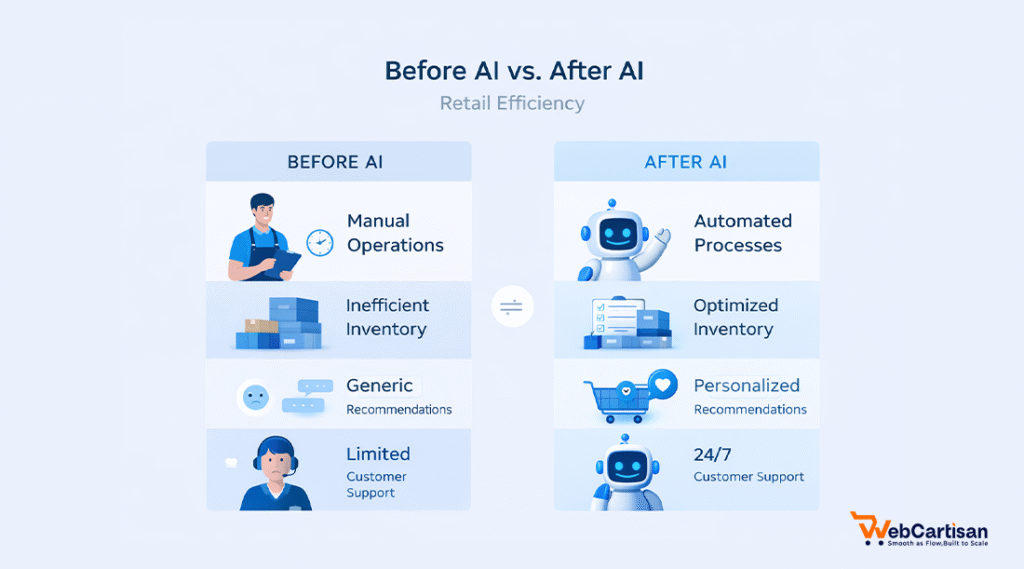
While the applications describe the “what,” the use cases show us the “how.” Many successful brands have already seen a massive ROI by focusing on specific pain points in the customer journey. We see these implementations as the blueprint for a modern, tech-driven storefront.
When we analyze these use cases, it becomes clear that data is the new currency. The more we understand about our shoppers, the better we can serve them. Here are the most impactful ways companies are currently utilizing AI in ecommerce.
A cart recovery with behavioral triggers
Almost 70% of online shopping carts are abandoned before the purchase is finished. Instead of sending a generic email, AI analyzes the specific behavior of that user. It might offer a discount on the exact item they hesitated over or suggest a cheaper alternative that fits their budget better.
Sentiment analysis for better product development
Understanding what people say about your products is vital. AI tools can scan thousands of reviews across different platforms to identify recurring themes. If customers consistently mention a specific flaw, we can address it in the next production cycle. This proactive approach turns negative feedback into a tool for growth.
Fraud detection and risk management
Security is a non-negotiable part of online business. Machine learning models are trained to spot the subtle signs of fraudulent transactions that a human eye might miss. By analyzing IP addresses, purchasing patterns and shipping locations, these systems flag high-risk orders before they are processed.
Virtual try-on and augmented reality

In categories like eyewear, makeup and apparel, the inability to try products is a major barrier. AI-powered AR tools allow customers to see how a product looks on their own face or body using their smartphone camera. This technology significantly reduces return rates because customers have a better idea of what to expect.
Hyper-targeted marketing campaigns
Moving away from “blast” emails is essential for modern marketing. AI segments your audience based on their specific interests and likelihood to buy. We can then send highly relevant content to each segment, which drastically increases open rates and conversions through AI in ecommerce.
- Customer segmentation
- Automated email flows
- Dynamic ad placements
- Loyalty program optimization
Final words
The evolution of digital retail is a journey we are all taking together. We have explored how AI in ecommerce can transform every aspect of your business—from the way you manage your warehouse to the way you talk to your customers. These tools are no longer reserved for those with massive budgets; they are accessible, scalable, and ready to implement today.
As we look toward the future, the goal is to create a seamless blend of human creativity and machine efficiency. Start small by picking one area of friction in your current process and see how a smart tool can smooth it out. We believe that those who embrace these changes will be the ones who define the next decade of online shopping.
Managing an online store is challenging, but you do not have to do it alone. By staying informed and open to new technologies, we can build businesses that are not only profitable but also resilient in the face of change. Make sure to audit your current tech stack regularly to ensure you are taking full advantage of the latest ecommerce trends.
Frequently Asked Questions ( FAQs)
How does AI improve the customer experience?
AI provides 24/7 support through chatbots, offers hyper-personalized product recommendations, and enables visual search. These features save time for the shopper and ensure that their interactions with a brand feel relevant and helpful rather than generic.
Can small businesses afford to implement AI tools?
Yes, many AI solutions are now available as affordable plugins. Tools for email automation, basic chatbots, and inventory forecasting are specifically designed for small teams. You can find a list of the Best AI Tools for Small Business in 2026 to get started.
What are the biggest challenges when implementing AI?
The primary hurdles include ensuring high-quality data, maintaining customer privacy, and integrating new tools with existing legacy systems. We suggest starting with one specific tool—like an AI-powered helpdesk before scaling to more complex systems.
Will AI replace human customer service agents?
No, we believe AI acts as a partner rather than a replacement. While AI handles routine questions about shipping or returns, human agents are freed up to handle sensitive complaints, complex problem-solving, and building long-term relationships with customers.
How does AI help in preventing ecommerce fraud?
Machine learning models analyze thousands of data points such as IP addresses and buying frequency to detect suspicious patterns in real time. This allows the system to flag or block fraudulent transactions before they hurt your revenue.
Share your ideas or ask questions in the comments. We would love to hear from you! Want more WooCommerce growth strategies, giveaway ideas, and plugin updates?
Subscribe to our blog and never miss a post.